The Upper Dolpo Cultural Circuit Expedition
-
Upper Dolpo, Nepal -
25 Days
Popular Searches
Press ESC to close
A profound 25-day wilderness camping expedition that functions as a journey back in time into one of the last bastions of pure trans-Himalayan culture. Features a unique horseback crossing over Saldang La (5,200m), visits to 1,000-year-old monasteries, and the iconic Kang La Pass (5,350m).
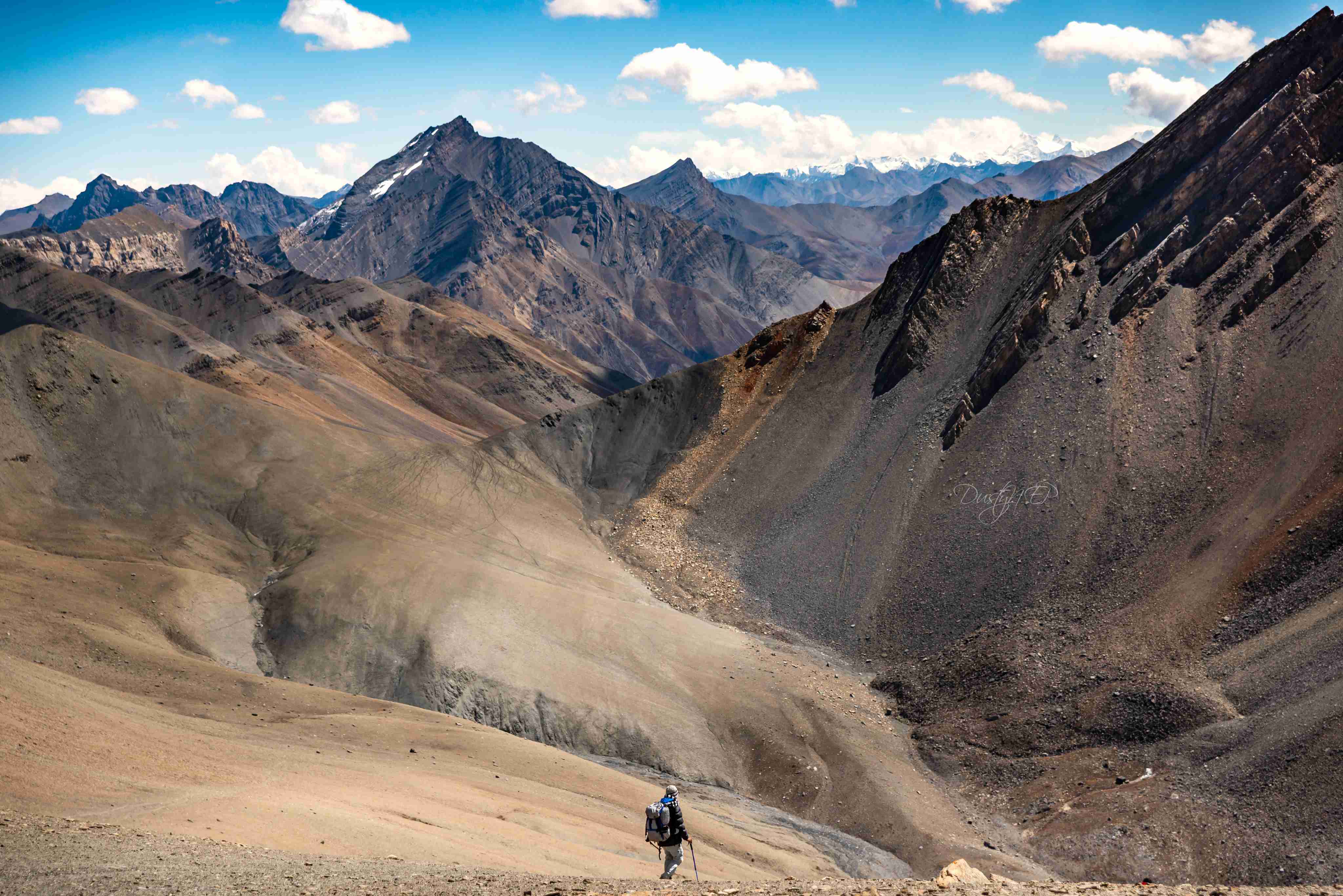
The Upper Dolpo Cultural Circuit is a profound 25-day wilderness camping expedition that transcends physical trekking, functioning as a journey back in time into one of the last bastions of pure trans-Himalayan culture. Leaving the Hindu-dominated lower valleys, your self-sufficient caravan pushes up the sheer gorges of the Tarap Chu to enter a hidden world where the ancient, animistic Bon religion and Vajrayana Buddhism coexist in perfect harmony. You will walk the legendary salt trade routes of the yak caravans, crossing the Jhyang La Pass (5,150m) to drop directly into the historic trading capital of Saldang. Pushing further into the profound silence of Nyisal, you will explore the 1,000-year-old Yangjer Gumba. The route weaves through Karang before climaxing in an incredible, cinematic horseback crossing over the 5,200m Saldang La—utilizing ancient local transport to reach the 11th-century Shey Gompa beneath the holy Crystal Mountain. After conquering the massive Kang La Pass (5,350m) on foot, the expedition rewards you with a dedicated immersion into the ancient Bon heritage at Ringmo, sitting beside the blinding turquoise waters of Phoksundo Lake before descending back to the modern world.
Route Type: High-Altitude Wilderness Cultural Camping Traverse & Equestrian Crossing
Difficulty: Strenuous / Challenging (Requires excellent cardiovascular endurance, basic equestrian comfort, and extreme altitude acclimatization)
Maximum Altitude: 5,350m / 17,552 ft (Kang La Pass)
Accommodation: Fully Supported Wilderness Tented Camping (with hotels in Kathmandu & Nepalgunj)
Permit Requirements: Upper Dolpo Restricted Area Permit (RAP), Lower Dolpo RAP, Shey Phoksundo National Park Permit, Trekkers' Information Management System (TIMS) Card
Insurance Requirement: Mandatory. Comprehensive travel insurance explicitly covering high-altitude helicopter rescue and emergency medical evacuation up to 6,000m is strictly required.
Your anthropological Himalayan adventure begins in the vibrant capital. Following a warm welcome and hotel transfer, your evening is dedicated to an absolute, rigorous gear check. Your lead guide will also provide a briefing on the cultural protocols for visiting the sacred Bon and Buddhist sites ahead.
You will fly down to the humid, subtropical plains of the Terai region. Nepalgunj is the historic gateway for goods moving between the lowlands of India and the high Himalayas, serving as your staging ground for the wild far-west.
A thrilling 35-minute mountain flight brings you to Juphal. You are currently in the lower, Hindu-influenced middle hills of Nepal. Meeting your mule caravan, you will walk a short trail to Dunai, the administrative headquarters where lower-valley farmers historically traded grain for Tibetan salt.
You push east along the Barbung Khola toward Tarakot. Historically known as "Dzong" (fortress), Tarakot was the capital of the ancient independent kingdom of Tichurong. The ruins of the old fortress here once collected tolls from the massive trading caravans traversing between Dolpo and Tibet.
A massive, physically demanding day as you push directly into the high country. Hiking high above the roaring Bheri River, you will cross the massive suspension bridge and pivot sharply north into the Tarap Chu gorge. The physical landscape violently changes as you navigate steep switchbacks carved directly out of sheer rock walls, eventually arriving at the natural rock-shelter of Laini Odar to camp.
You are now walking the exact, perilous river gorge route featured in Eric Valli's Oscar-nominated film Himalaya. You will pass through narrow, sun-starved canyons, setting up camp at Nawarpani just as the tree line vanishes entirely into alpine scrub.
Breaking out of the claustrophobic gorge, the landscape miraculously opens into a sweeping glacial valley. You arrive at Dho Tarap, a high-altitude settlement enclosed by ancient stone walls. The locals here, known as the Tarapali, wear traditional homespun Tibetan clothing (Chubas) and trade primarily in yak products and salt.
A profound day of spiritual exploration. Dho Tarap is a geographical melting pot of two faiths. You will visit the ancient Ribo Bhumpa Gompa, a Nyingma (Red Hat) Buddhist monastery, and the Shipchaur Gompa, an active sanctuary of the Bon religion.
Leaving Dho Tarap, you push north toward the massive natural barrier dividing the region. You will pitch your tents in a desolate rock basin, surrounded by the stark, silent beauty of the high desert.
You will tackle the grueling ascent of Jhyang La (Jyanta La). From the summit, you gaze out across the arid, brown hills that roll endlessly toward the Tibetan border. A knee-jarring descent brings you into the sprawling northern valleys, arriving at the deeply traditional village of Rakyo.
A visually stunning walk through white-washed hills brings you to Saldang. Situated on a massive plateau, this is the historical heart of Inner Dolpo. Because the arid land cannot produce enough grain, Saldang survived for centuries as the epicenter of the trans-Himalayan salt trade, acting as the primary barter hub between the nomads of Tibet and the farmers of Nepal's lower valleys.
Leaving the bustling trading hub behind, you push deeper into the forgotten Panzang valley. Weaving along the arid valley floor, completely immersed in profound silence, you arrive at Nyisal, an intensely traditional settlement entirely disconnected from mechanized life.
A magnificent day of monastic exploration. You will take the short walk to the revered Yangjer Gumba (Yangze Gompa). Operating under the Karma Kagyu sect of Tibetan Buddhism, it is recognized as one of the oldest and wealthiest monasteries in Upper Dolpo. Built roughly 1,000 years ago, you will explore its dimly lit halls, which safeguard centuries-old thangkas, intricate statues, and priceless ancient scriptures that survived the ravages of history across the border.
The expedition loops south, crossing high ridges to drop into the neighboring valley of Karang. This area is famous for the spectacular Sungjer Gompa, an ancient monastery perched dramatically on a promontory overlooking the valley. You will explore this spiritual sanctuary before meeting your local horsemen to prepare for tomorrow's crossing.
An unforgettable highlight of the expedition. Rather than enduring a punishing two-day foot slog over the Saldang La, you will mount sturdy, sure-footed Tibetan horses provided by the local villagers. Riding in the ancient style of the Dolpo-pa traders, you will conquer the 5,200m divide in a single, cinematic day, arriving fresh and invigorated at the absolute spiritual epicenter of the region: the legendary Shey Gompa.
You will spend the day enveloped by the spiritual energy of this sanctuary. Shey Gompa sits directly beneath Riboche (The Crystal Mountain). Its twisted, quartz-laced peaks are considered so holy that locals perform a strenuous kora (circumambulation) around the entire mountain during festivals. You can hike up the barren slopes to visit the ancient meditation caves famously chronicled by Peter Matthiessen in his classic book, The Snow Leopard.
Leaving the Crystal Mountain behind, you hike through a narrow, dramatic rock gorge. You will set up your tents in the bleak, wind-swept bowl of Kang La Base Camp to brace for the extreme cold and the final major geographical hurdle of the expedition.
Returning to foot travel for the ultimate physical test, you will push up the steep, snow-covered slopes of Kang La (5,350m). Reaching the summit, you cross the great divide out of Inner Dolpo. A massive, knee-jarring descent plunges you back into the sparse alpine tree line to set up Forest Camp.
You will navigate the infamous "Demon's Trail"—a terrifyingly narrow, exposed wooden gangway pinned directly to the sheer cliffs high above the water. Surviving the crossing, you will arrive at the village of Ringmo. You will set up camp beside the mesmerizing, deep turquoise-blue waters of Phoksundo Lake.
A deeply rewarding day dedicated to the ancient, pre-Buddhist Bon religion. You will explore the mud-plastered chortens and mani walls of Ringmo, explicitly noting how the swastikas face counter-clockwise—a hallmark of the Bon faith. You will hike up the ridge to explore the magnificent Tshowa Gompa, a 900-year-old Bon sanctuary overlooking the turquoise lake. Interacting with local practitioners, you will gain a profound understanding of a spiritual tradition that predates the arrival of Tibetan Buddhism by centuries.
Your exit back to civilization begins. Plunging rapidly down the Suli Gad gorge, the sudden return of thick, oxygen-rich air and dense pine forests provides a massive surge of energy as you march into Chhepka.
Following the roaring river through the subtropical forests, the culture shifts rapidly back to Hindu-influenced farming hamlets. You will push all the way back to your starting point at Dunai, closing the massive geographical loop of your circuit.
Your final hours on foot. You will ascend to the Juphal airstrip, where your trekking boots finally come off. You will bid an emotional farewell to your Sherpa team and take the mountain flight back to the sweltering heat of Nepalgunj to spend the night.
You will catch your connecting flight back to the capital. Arriving in the sensory overload of Kathmandu, you will transfer to your hotel for a desperately needed, luxurious hot shower and a celebratory dinner.
Your epic trans-Himalayan journey comes to an end. You will be transferred to Tribhuvan International Airport, heading home with one of the most elite, culturally profound mountaineering achievements possible.
Note: Multiple restricted permits; arrange 6-8 weeks ahead
Map not available
No gallery images available.
Every Journey Is Carefully Crafted To Bring Your Travel Dreams To Life.
Popular Searches
Tap backdrop or drag down to close